
Sign up to receive County Executive Pittman's Weekly Letter to be the first to learn about big announcements, and get an inside look at issues crossing the County Executive's desk.
Life on the fourth floor has been busy. We heard the last twelve of 34 departmental budget presentations, made our pitch to all three bond rating agencies, met with a group of heroic and hardworking elementary and special education teachers, held a very constructive cabinet meeting, continued to navigate the north county wastewater allocation crisis, honored the six men from El Salvador, Guatemala, Honduras, and Mexico who lost their lives doing maintenance on our Key Bridge two years ago yesterday, cut the ribbon on our brand-new Tanyard Springs Park, met with our dynamic Commission for Women, produced a Pittman and Friends Podcast to air next week with the extraordinary Dr. Shawn Ashworth, and last night helped launch opening night at the Annapolis Film Festival.
But I want to talk about bitterness.
Last Thursday, I attended the third annual conference of our Anne Arundel County Nonprofit Center in our newly renovated building at Crownsville Hospital Memorial Park. It’s a wonderfully welcoming brick building that bustles with the activity of emerging community-based nonprofits, and the group who were gathered for the day included many of my heroes.
My job was to welcome them, encourage them, and then get on my way back to the Arundel Center for budget meetings. After speaking, I politely stood near the exit as the next speaker, the keynote speaker, made her way to the podium and began her remarks. I was planning to slip out once she had everyone’s attention, but I couldn’t. Something about her demeanor made me linger. About a minute in, I realized that she was saying things I needed to hear, so I found an empty seat and listened. When it was over, I stayed even longer, to thank her, and to get my fan picture with her.
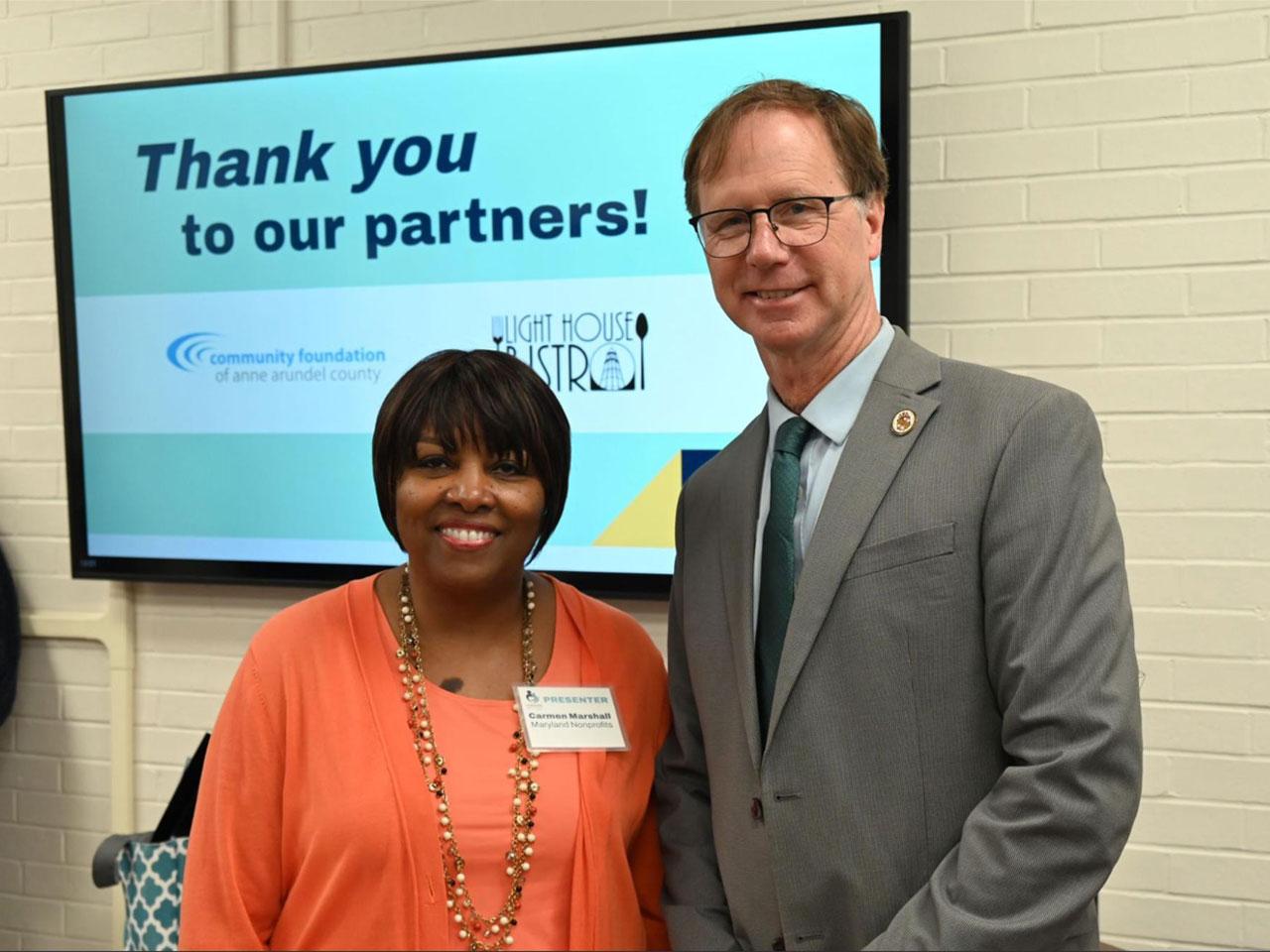
Carmen C. Marshall, the interim President and CEO of Maryland Nonprofits, spoke mostly of the work, of building organizations in tough times, and she had great stories to back up her fierce optimism. But she knew that her audience was human, was people with strengths and weaknesses and moments of self-doubt and, yes, even bitterness.
She told us to “Love the mission enough to serve it well,” and to, “Let go of what poisons the future.”
”I mean that very personally,” she said and then paused to allow each of us to catalogue our lists.
”Rid yourself of bitterness. Rid yourself of disappointment that has become identity. Rid yourself of anger that has calcified. Rid yourself of betrayal that has begun shaping your decisions and your self-worth. Because those things will poison your possibilities.”
Yes. They cling on, drag me down, paralyze me, and I blame them, but this truth-telling woman is telling me that I am the one who empowers them.
“They will distort your discernment. They will affect how you hire. They will affect how you partner. They will affect how you speak. They will affect how you lead.”
And it’s not just me. I see when it happens to my staff, to my peers in politics, to leaders everywhere. We are all victims.
“Bitter people do not make good business partners. Bitter people do not make good builders. Bitter people do not make good stewards. And wounded leaders who refuse healing often create wounded organizations. So part of building is also becoming well.”
We thought we had to suffer for our organizations to thrive, but no, we can do the opposite. We can heal instead.
Or as Anne Arundel County Caucus of African American Leaders Convenor Carl Snowden often says, “Let’s make America better, not bitter.” But let's start wherever we are.
Thank you, Carmen Marshall, for sharing your words and spirit, and allowing me to share them at this week’s cabinet meeting, and in this letter.
Until next week…