
About
ALPR cameras are a significant enhancement to our existing public safety initiatives and are strategically placed to enhance crime prevention and investigative capabilities.
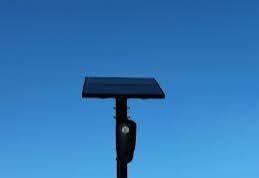
ALPR technology has been in place in Anne Arundel County since 2011. LPRs are a commonly used tool by thousands of law enforcement agencies nationwide. The modern ALPR system is an environmentally friendly solar-powered, stationary, pole-mounted reader that interacts with patrol officers and detectives.
Key Advantages
-
Significant improvements in crime prevention
-
Ability to conduct enhanced investigations
-
Increased success in vehicle recovery
Trust, Privacy, and Transparency
Automated License Plate Readers (ALPRs) are used solely for legitimate law enforcement purposes, such as investigating stolen vehicles, violent crimes, and locating missing persons, all of which are governed by Maryland state law and our internal policy.
- The use of ALPR technology is strictly regulated by Maryland Public Safety Article 3-509.
- This law dictates the acceptable uses of ALPR technology and protects against potential misuse.
In addition to state law, the use of ALPR technology within the Anne Arundel County Police Department is strictly outlined in the License Plate Reader Index Code.
Data Ownership and Retention by vendor:
- Flock: The Anne Arundel County Police Department owns and maintains the ALPR data collected by the Flock System. As of this SOP's issuance, the state system, through MCAC, cannot ingest historical data from the Flock System. The Anne Arundel County Police Department retains license plate reads for 30 days before the system automatically purges them.
- Leonardo: The Anne Arundel County Police Department owns and maintains ALPR data collected by the Leonardo System for 24 hours. After that time, the system automatically sends the historical data to MCAC for a retention period determined by MCAC. All requests to query historical data in the Leonardo System more than 24 hours old will be redirected to MCAC.
- Vigilant: Motorola Solutions is a third-party company that manages and controls the ALPR data collected by the Vigilant system and provides AACo PD access to query the data it owns. Motorola Solutions retains data according to its retention policy. Motorola Solutions may adjust retention policies at any time. The system automatically deletes data based on the retention policy, and Motorola Solutions keeps no record of data after deletion unless the agency/entity requests data archival and classification.
While we use multiple ALPR systems, the largest is the Flock System. View the transparency dashboard for the Flock System: https://transparency.flocksafety.com/anne-arundel-county-md-pd-
History
Our existing use of Automated License Plate Readers has already proven invaluable in criminal and serious motor vehicle crash investigations in areas where they have been deployed. We have seen significant improvements in crime prevention, enhanced investigation capabilities, and increased success in vehicle recovery. Our systems automatically capture license plate information and vehicle characteristics, which allows officers to quickly identify and locate vehicles associated with criminal activity, stolen vehicles, or individuals wanted in connection with crimes. The data collected provides valuable leads for ongoing investigations, enabling law enforcement to identify suspects and gather crucial evidence, ultimately contributing to higher case clearance rates.
Contact
If you have questions about the Automated License Plate Reader Program, please contact our ALPR Program at PoliceALPR@aacounty.org.
Success Stories
We have had numerous successes with our ALPR investigations. Please take a look at some of the successes we have had with our ALPR platforms on our ALPR Highlights page.
The following videos highlights recent examples that illustrate how the Automated License Plate Reader Program significantly enhances criminal investigations.
Recent Success Videos
Frequently Asked Questions
The Anne Arundel County Police Department uses Flock ALPR stationary and trailer devices, Elsag by Leonardo ALPR Mobile devices, and the Vigilant System by Motorola, which houses third-party data.
We do not use Flock CCTV (Condor) video cameras. We only have Flock ALPR (Falcon) cameras, which take still images of passing vehicles, focusing on the rear license plate.
Flock’s cloud platform and customer data have not been breached. Recent public claims refer to security research involving a device that had not been deployed to a customer or connected to the Flock cloud. The reported scenario did not provide access to historical footage, search logs, customer images, or other agency data. Flock addressed the reported findings, implemented additional security hardening, and continues to monitor and improve its security program. Customer data is encrypted in transit and at rest, access is controlled through permissions and multi-factor authentication, and system activity is logged for auditability. For additional documentation, including security certifications and compliance materials, please visit Flock’s Security Center.
The reports generally combine several different topics: security research findings, access to a single device under unusual factory or programmer-mode conditions, and broader concerns about privacy or surveillance. Those topics are often described online simply as “Flock was hacked,” even though the findings did not demonstrate a breach of Flock’s cloud platform or customer data. The important distinction is between access to a physically obtained device and unauthorized access to the secure cloud environment where customer evidence and metadata are stored. Access to one device does not provide access to other cameras or to Flock’s cloud database. Flock takes security concerns seriously, discloses relevant findings, remediates issues, and provides customers with independently assessed security and compliance information through our Security Center.
Per Maryland Public Safety Article 3-509, “Automatic license plate reader system” means a system of one or more mobile or fixed high–speed cameras used in combination with computer algorithms to convert images of license plates into computer–readable data.”
The Anne Arundel County Police Department currently operates 91 fixed LPR locations.
Cameras are placed at strategically selected public locations based on several factors: crime statistics, common vehicular ingress and egress points, and traffic volume.
The Anne Arundel County Police Department uses Automatic License Plate Reader (ALPR) technology in accordance with departmental policy and Maryland state law to support criminal investigations and enhance public safety. The system, which uses a combination of mobile cameras on police vehicles and fixed cameras monitoring public roads, is used for legitimate law enforcement purposes, such as investigating crimes or locating wanted and missing persons. ALPR converts a license plate image into "captured plate data," which includes the plate number, a photo, and the time, date, and location of the scan.
To ensure responsible use and protect privacy, departmental policies and state law provide strict accountability. Access to ALPR data is restricted to trained personnel, and the department conducts audits to ensure its lawful use. As required by law, the department also reports specific system metrics to the Maryland General Assembly. Under the Maryland Public Safety Article, all captured data is the property of the police department and cannot be sold by the agency or its vendors. Vendor access to data is prohibited without express authorization, and any employee or vendor who violates these state regulations is subject to criminal penalties.
All ALPR data will be retained for no longer than 30 days. ALPR Data is deleted based on department policy, which is publicly available: AACo PD LPR Policy.
- We do not use AI Facial Recognition in our LPR program.
- We do not collect video of the passing vehicles. We collect still images only. The image is focused on the rear of the vehicle and the space where the license plate should be displayed. It is not focused on the passenger area of the vehicle.
- We do not collect personal identifying information of drivers passing. The LPR system is not connected to MVA in a capacity to provide the registered owner of every vehicle that passes.
- We do not allow every officer to query the data in our system. Only a limited number of trained and authorized police department personnel are given query access in our system.
- We do not share the ability to query the system with anyone outside the Anne Arundel County Police Department. All queries of the LPR systems must follow department policy, which is in accordance with Maryland Law.
We do investigate legitimate law enforcement purposes as allowed by Maryland Law.
- We do receive alerts from MVA for suspended registrations of passing vehicles.
- We do receive alerts from NCIC for stolen vehicles, missing persons, and other incidents listed in legitimate law enforcement databases for criminal incidents.
Legitimate Law Enforcement Purposes:
a) The investigation, detection, or analysis of a crime(s).
b) The investigation of a violation of the Maryland vehicle law(s).
c) The investigation or location of persons known to be terrorists (Terror Watch List) or wanted.
d) The investigation, location, and searching of missing or endangered persons (AMBER, SILVER, BLUE, etc. alerts).