

Lead and Copper Rule Background
In January 2021, the U.S. Environmental Protection Agency (EPA) released the Lead and Copper Rule Revisions (LCRR), which affects all water utilities in the nation. Anne Arundel County has been monitoring lead and copper in homes in accordance with the 1991 Lead and Copper Rule (LCR) and has not exceeded the regulatory action levels for either lead or copper. The revised regulations include new requirements for water utilities including, for the first time, a service line material inventory, updated sampling and reporting procedures, and additional public outreach.
Anne Arundel County prohibited the use of lead in the construction of water service lines in 1936 and has been actively replacing lead service lines for decades. Testing for lead in accordance with the LCR has been ongoing since 1991. As such, the probability of finding lead in the County water system is low, with our water quality consistently remaining well above state and federal regulatory standards.
About the Water Service Inventory Program
In response to the EPA’s LCRR, Anne Arundel County launched the Water Service Inventory Program (Water SIP), a comprehensive initiative to meet the requirements of the revised regulations.
A primary objective of the Water SIP is to provide educational outreach for residents to understand the LCRR, its impacts on Anne Arundel County water system customers, and any action needed by the public. This webpage serves as a one-stop destination for all information related to the program, providing easy access to valuable resources and tools.
A service line is an underground pipe that connects your home to the public water main, delivering water to faucets, bathtubs, showers, and other fixtures.
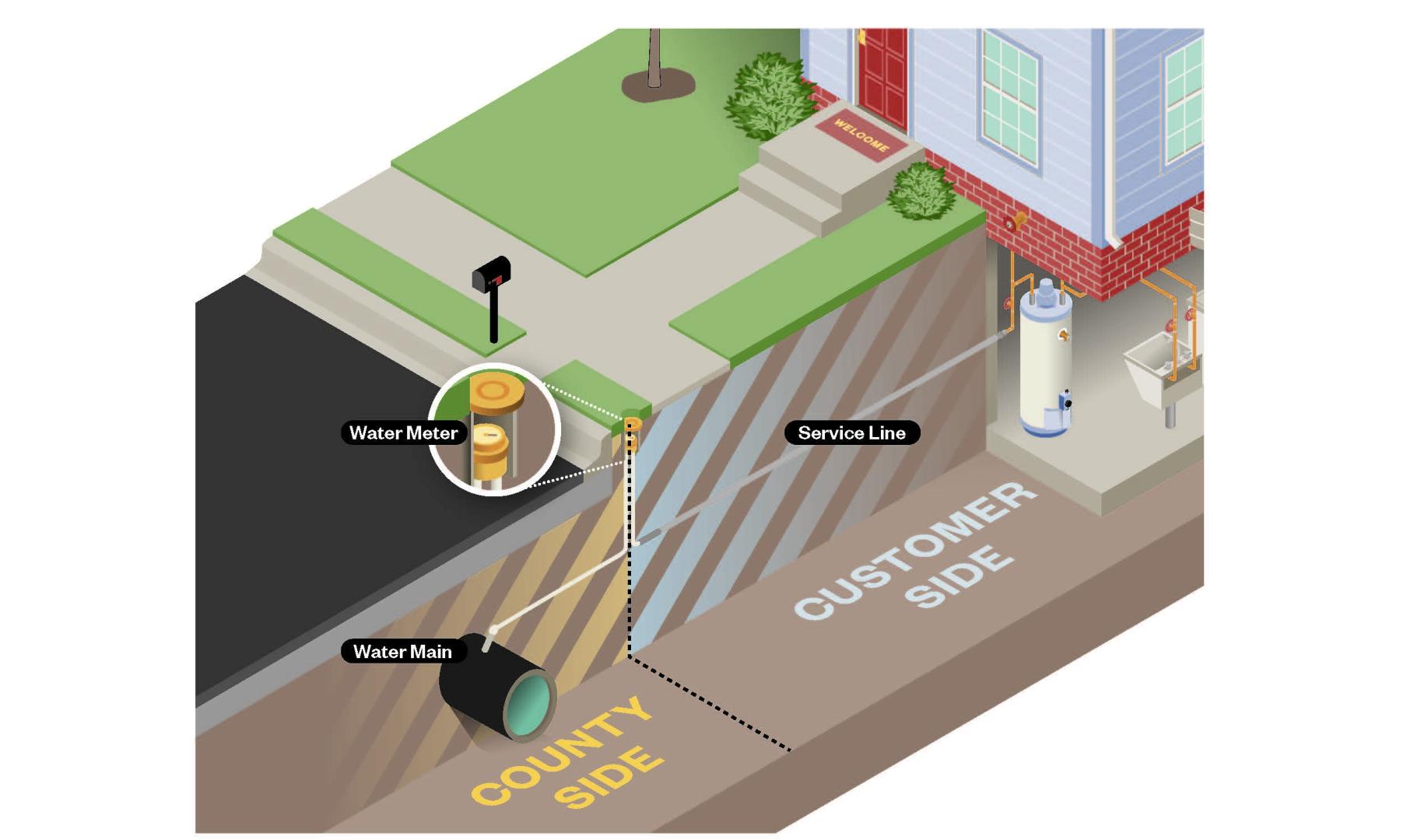
The following links provide information needed to understand the U.S. EPA’s LCRR and the purpose of the Water SIP. Click on the links to learn more.
- For more information on the EPA’s Lead and Copper Rule revisions, visit the EPA website.
- Learn more about the sources of lead and the health effects of lead in drinking water from the EPA website.
- Learn how to reduce lead exposure in drinking water from the EPA website.
Current records show that Anne Arundel County does not have any known utility-owned lead service lines in our service areas. Although lead service lines are unlikely since the 1936 ban, we are requesting the public’s assistance to identify service line pipe material in homes where no data currently exists.
Only customers with an unknown service line material are being asked to fill out and submit a self-reporting survey. To determine if your service line is listed as being made from an unknown material, type your address in the interactive map below. If a blue dot appears, you will be prompted to take the survey. If the material of your service line is listed, no further action is needed on your part.
The information from the survey will be used to create an inventory that will be made available on this site. The inventory is a major component of the LCRR and must be submitted to the EPA by October 2024.
Customers listed as having a service line of unknown material may receive a letter from the County in the mail requesting the completion of the self-reporting survey.
Anne Arundel LCRR Self Reporting Tool (arcgis.com)
What is test pitting?
Test pitting, also known as vacuum excavation, is a field verification method to expose and visually confirm pipe materials on the customer side of the service line. Test pitting uses pressurized air or water to dig small test holes to safely expose and verify the exact location, depth, and material of underground utilities (pipes, cables, gas lines).
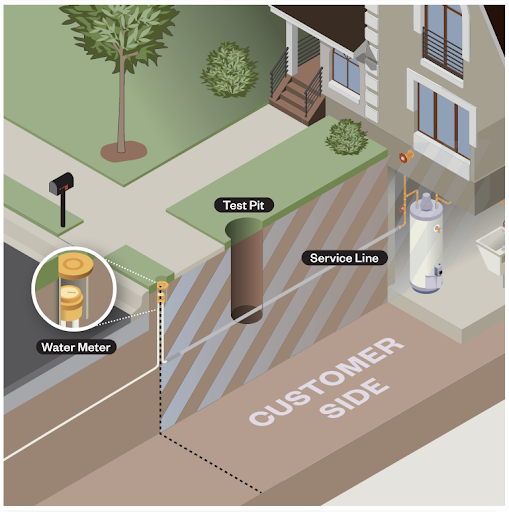
Test pitting will be performed by a County contractor, CNC Civil Services, LLC, using a vacuum excavation truck similar to what is shown below.
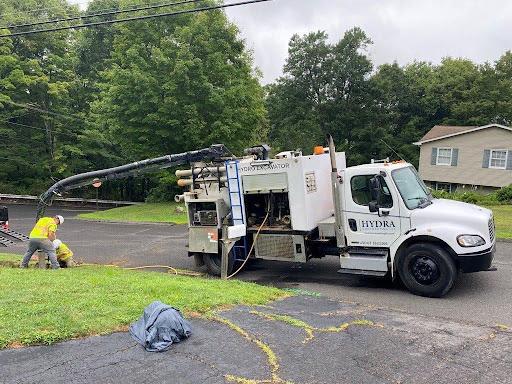
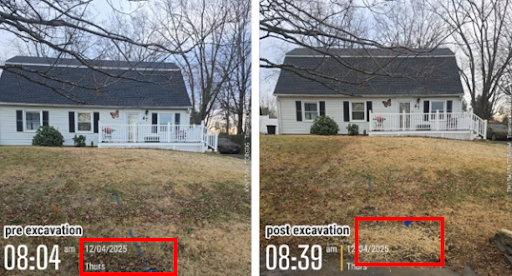
This is a minimally invasive inspection method. It involves digging a small area (approximately 12 inches by 12 inches) near your water meter box. The property will be restored by replacing sod or mulch after the hole is filled.
Frequently Asked Questions
Who will perform the inspection?
Test pitting will be performed by CNC Civil Services, LLC.
When will the inspection occur?
DPW expects the first round of test pit verification to begin in April 2026 and continue for approximately three months.
Do I have to be present for the inspection?
No. We will be inspecting the service line within approximately three (3) feet of the meter box near the road by your home. We will leave a door hanger to notify you that the inspection was performed.
Will the County need to enter my property?
Yes. The County will need to access your property on the exterior of your home to conduct the inspection near the meter box.
Will my water be shut off for the inspection?
No. Your water service will not be interrupted.
Do I have to pay for the service line inspection?
No. The inspection will take place at no cost to you.
Will my yard have to be dug up?
The inspection requires digging a small area (approximately 12 inches by 12 inches) near your meter box. The property will be restored by replacing sod or mulch after the hole is filled.
How will I know the results of the inspection?
Results of the test pit verification will undergo review by the DPW team and be made available on the Service Line Inventory Map within a month of verification. To view the results, scroll down on this webpage to find the VIEW THE INVENTORY button.
The County will notify you if the service line requires replacement.
I received a notice, but my property was not inspected in this time frame.
Your property was likely not inspected due to obstructions such as fences or paved surfaces preventing equipment access.