County Seal with name Anne Arundel County

The Pittman Years

Pittman Years Logo


  The Pittman Years: 2018-2026


Over the past eight years, the people of Anne Arundel County have seen the results of a new approach to governance that prioritizes education, inclusion, public investment, economic growth, economic justice, environmental stewardship, fiscal discipline, and community engagement. County Executive Steuart Pittman and his team of dedicated public servants have demonstrated that when government engages with the people it serves, progress is achieved.

"The work we have done together these last eight years has instilled in me a new confidence that human beings can, in fact, cooperate with one another and create public institutions that deliver peace and progress."

Explore highlights of the Pittman Administration below to explore our work to make Anne Arundel County The Best Place - For All.

 Administration Highlights


 Community Engagement & Transparency
 

Community Engagement:

  • Created the Office of Community Engagement & Constituent Services (CECS) to shift government operations from reactive concern-handling to proactive resident participation.
  • Hosted Budget Town Halls annually, visiting all seven County Council Districts with each Councilmember to hear budget priorities directly from residents. 
  • Modernized the community meeting process to allow for greater public participation by allowing virtual meetings, prohibiting meetings on county holidays, expanding the radius of properties that get notified, staggering the start time of meetings in the same Council district, restricting the number of meetings in the same district to two, and publicizing meetings through the CECS newsletter. 
  • Launched River Days, annual festivals at different rivers around the county that provide residents free public water access and the opportunity to connect with our waterways and learn how to protect them. 
  • Hosted the county’s first Community Association Summit, an annual event designed to empower local leaders and strengthen neighborhood networks across the county.
  • Launched EngageArundel, a webinar series designed to empower community leaders and residents with the knowledge and tools to create sustainable and thriving neighborhoods using county resources.

Community Partnerships:

  • Created the Immigrant Affairs Commission to facilitate civic engagement among immigrant communities and advise county government on ways to improve access to county services. 
  • Launched the Veterans Services Coordination Center, hired a manager that is certified to file claims with the U.S. Department of Veterans Affairs, and stood up a dedicated phone line, providing a single access point for local, state, and federal government resources available to veterans and their families.
  • Passed legislation to codify the county’s existing Veterans Affairs Commission and updated it to the Commission for Veterans and Military Families, expanding their role and allowing us to better serve our veteran and military communities. 
  • Partnered with the Elizabeth Dole Foundation to become the first Hidden Heroes County, joining a movement of over 150 communities nationwide committed to identifying military caregivers and increasing awareness and support. 
  • Partnered with the Caucus of African American Leaders to host the annual Few of the Many and Michelle Obama Award Celebrations to honor and celebrate local leaders during Black History Month and Women’s History Month.
  • Hosted the county’s first Hispanic Heritage Awards with the Office of Multicultural Affairs to honor and celebrate Hispanic and Latino leaders in the county. 

Transparency:

  • Founded ArundelStat, the county’s first performance and data analytics team. 
  • Created OpenArundel, a collection of tools, reports, and data developed to empower residents with information and to encourage civic engagement. 
  • Created BuDDE (Budget & Data Development Explorer), a public tool for tracking county revenue and spending.
  • Launched the Community Wellbeing Index, a tool that identifies local service gaps and inequities in the county to help policymakers, county agencies, and community leaders address these disparities. 
  • Passed legislation to create a public campaign financing system for County Council and County Executive candidates. 
  • Worked with the Maryland General Assembly to pass enabling legislation, allowing local legislation to reform campaign finance rules in Anne Arundel County to prohibit campaign donations to county council and county executive candidates by developers with applications pending before the county.
  • Created My Anne Arundel, a countywide mapping application which allows residents to view and interact with a variety of county datasets, including capital improvement projects, planning and zoning, and transportation.
  • Created a county resource guide for residents to have a centralized and accessible reference point for vital services and information.
 Diversity, Equity & Inclusion
 

Combating Discrimination & Hate:

  • Established the county’s first fair housing ordinance to prohibit discrimination - taking Anne Arundel County from having no local fair housing law to having the strongest, most inclusive fair housing policy in the state in 2019. 
  • Codified the Human Relations Commission and granted them enforcement power to stop the practice of housing discrimination in our county. 
  • Passed the county’s first ever comprehensive anti-discrimination law to broaden anti-discrimination protections to cover both private and public employment as well as public accommodations. The law also expanded the powers of the Human Relations Commission to address complaints of discrimination in the new areas. 
  • Created the Family Protection Initiative to provide immigrant families with legal assistance and crisis support services.
  • Launched the Hate Crimes Prevention Program after securing a $1.2 million grant through the US Department of Justice to implement the Matthew Shepard and James Byrd, Jr. Hate Crimes Program in the county. 
  • Created an online hate bias incident reporting portal to provide victims and witnesses of hate bias incidents with another way to report information about the incident(s). 
  • Hosted the Standing Together Against Hate Conference to help build a safer, more inclusive community by uniting law enforcement, community leaders, and residents to proactively address hate and bias incidents.

Institutionalizing Equity:

  • Created the Office of Equity and Human Rights to develop policies, programs, and procedures that prioritize equity, diversity, and inclusion across all county agencies and operations.
  • Created the Office of Multicultural Affairs to better serve and support the diverse communities in our county. 
  • Established the award-winning Office of Health Equity and Racial Justice to address racism as a public health issue and implement health equity and racial justice initiatives in the county. 
  • Passed legislation to support language access and ensure that residents with limited English proficiency have equal access to county programs and services.
  • Entered the national cohort seeking Certified Welcoming designation from Welcoming America, positioning the county as a leader in immigrant inclusion. 
  • Joined the Government Alliance on Race and Equity (GARE), a national network of government jurisdictions working to normalize, organize, and operationalize racial equity. 
  • Launched the Procurement Access and Vendor Equity (PAVE) Program, a new initiative designed to foster inclusion and eliminate barriers to participation in County contracts for Certified Business Enterprises (CBEs), including Minority Business Enterprises (MBEs), and bring wealth to local minority businesses. This included the creation of an online CBE Directory, allowing agencies quick access to CBE vendors and serving as an external resource for local CBE vendors. 
  • Signed an executive order affirming the county’s commitment to equity, diversity, and inclusion across county government, and the use of an equity lens in reviewing policies, procedures, and common practices.

Acknowledging History:

  • Renamed “The People’s Park” and dedicated the park to the people of the Old 4th Ward, installing storyboards to share the history of the transgressions committed by Anne Arundel County government that permanently disrupted the tight-knit community of African American families living along Clay Street. 
  • Funded the process to restore the Ralph J. Bunche Community Center into a space that will preserve local African American history and provide educational, recreational, and social opportunities for the community. 
  • Signed an Executive Order recognizing Juneteenth as a county holiday before it became a federal holiday. 
  • Anne Arundel County Public Library became the first designated book sanctuary in Maryland, ensuring residents have the freedom to read and that all voices, stories, and perspectives are protected. 
  • Renamed the Arundel Center North Building after Sarah E. Carter, the first African American woman elected to the Anne Arundel County Council. 
  • Launched an oral history virtual tour of the Civil Rights Era in the county, in partnership with local histories, featuring more than 50 oral history interviews. 
  • Partnered with the Lost Towns Project to launch an online virtual trail, highlighting nearly 200 historic sites about African-American life in Anne Arundel County’s Four Rivers Heritage Area. 
  • Supported the UNESCO designation of the Annapolis City Dock and London Town as Middle Passage Sites of Memory and the installation of Port Markers to recognize the history of resistance, liberty, and heritage. 
  • Hosted “A Day of Acknowledgment: Confronting the Legacy of Slavery” in partnership with communities leaders to provide residents a historical overview from the Maryland State Archives and local historians, a formal apology for Anne Arundel County Government’s role in the institution of slavery and its lasting impact on Black communities, and a discussion about the work that remains.
 Economic & Workforce Development

Supporting Local Businesses 

  • Delivered more than $27 million in grants and loans through AAEDC to provide relief to local businesses impacted by the COVID-19 pandemic. 
  • Created the VOLT Microloan Fund through AAEDC and awarded $310,000 to county businesses to help small, minority-owned, woman-owned, and Veteran-owned businesses access affordable working capital.
  • Launched the Agricultural Business Improvement Grant program through AAEDC to provide matching grants up to $10,000 for farm-based businesses to expand operations, retain employees, and increase efficiency. 
  • Launched a Digital Services Grant through AAEDC to help small brick-and-mortar businesses thrive in an increasingly digital economy.
  • Passed legislation to extend outdoor dining to support the restaurant industry during the pandemic. 
  • Assisted businesses recover from two severe weather events by establishing targeted relief programs through AAEDC’s VOLT Disaster Recovery portfolio. The county distributed hundreds of thousands of dollars in grants that businesses repair physical damage, restart operations, retain employees, and stabilize during an especially vulnerable period.
  • Awarding more than $1 million in direct cash grants to 24 small businesses in Northern Anne Arundel County impacted by the collapse of the Francis Scott Key Bridge in partnership with AAEDC, the Maryland Tough Baltimore Strong Key Bridge Fund, and the Greater Baltimore Committee.

Supporting Our Workforce 

  • Passed Prevailing Wage legislation, setting minimum hourly and fringe benefit rates on county contracts to ensure a hard day’s work provides a fair wage. 
  • Repealed the ban on Project Labor Agreements (PLAs) for county construction, supporting family-sustaining wages, good working conditions, and job protections for workers.
  • Supported workers who had been laid off during the pandemic and could not access state unemployment benefits by launching the Excluded Worker Humanitarian Fund through AAWDC, providing cash assistance to 4,000 workers. 
  • Launched Operation COVID Health Corps to hire unemployed workers to fill a variety of critically needed positions to conduct contact tracing, testing, and outreach to reduce the spread of COVID. 
  • Fully resolved the post-pandemic school bus driver shortage ahead of neighboring jurisdictions by working with AACPS and AAWDC to provide competitive compensation and retention and new hiring bonuses for contracted school bus drivers and aides. 
  • Hosted hiring fairs during the pandemic and following mass federal layoffs, connecting residents in need of work to openings at county and state agencies and local businesses. 
  • Launched a post-pandemic workforce survey to capture the perspective of workers on the challenges and opportunities of the post-pandemic labor market to help guide county agencies and partners in developing targeted strategies to address workforce challenges.

Expanding Opportunities

  • Launched the Inclusive Ventures Program (IVP) through AAEDC to address the disproportionate economic challenges faced by small, minority-owned, woman-owned, and Veteran-owned businesses. Since inception, IVP has graduated 15 cohorts totaling 172 business owners, including 13 participants in the program’s first-ever Spanish-language cohort in Fall 2024.
  • Launched Turnaround Thursday, a partnership with the Department of Detention Facilities and Anne Arundel County Community Action Agency to reduce recidivism by providing incarcerated individuals with job training and the resources they need to get employed. The initiative is in its 16th cohort, and 200 individuals have graduated from the program since its inception. 
  • Supported the workforce needs of the military community, providing support for transitioning service members, veterans, and military spouses through agreements with Fort Meade, AAWDC, and Howard County.
 Education
 

Staffing & Compensation:

  • Added 450+ classroom teachers, 300+ special education staff, 100+ mental/behavioral health specialists, and 40+ English Language Acquisition positions.
  • Increased starting teacher salaries from $50,247 to $63,091, bringing our county from 12th to 4th highest starting teacher pay in Maryland, resulting in excellent hiring and retention for our teachers. 
  • Fully funded the missed back steps for our teachers, making them whole for the first time since 2008, and continued to fund step increases and cost-of-living-adjustments for teachers and school staff.

School Funding:

  • Increased direct public education funding by $367 million (+53%) since FY19.
  • Provided record increases in direct funding to support AACPS, including the largest increase in funding for education in county history with a $73.4 million increase in the FY27 budget. 
  • Appropriated over $1.4 billion in capital funding for school construction from FY20 through FY27, including funding for Severn Run High School, Old Mill High School, Center for Applied Technology North, Old Mill Middle School South, Old Mill Middle School North, Two Rivers Elementary School, and a greenhouse and a new team room at Southern High School. 
  • Funded the next cohort of AACPS feasibility studies, including Ruth Parker Eason, Arundel Middle School, Riviera Beach Elementary School, Chesapeake Bay Middle School/Bodkin Elementary School, Van Bokkelen Elementary School, and Glendale Elementary School.

Equity:

  • Partnered with AACPS to create the Joint Commission on the Opportunity Gap to boost kindergarten readiness. 
  • Distributed 7,000 free Chromebooks to eligible households, utilizing state digital equity funds to help close the digital divide. 
  • Named a Pilot Hub by the Consortium for Coordinated Community Supports and received $20 million in state funds to expand access to high-quality, accessible behavioral health and social emotional learning to improve student and family’s well-being and readiness to learn.
  • Provided funding to meet all the Maryland Blueprint for Education requirements to enrich student experiences and accelerate student outcomes for all children.

Libraries:

  • Opened the Michael E. Busch Annapolis Library, Riviera Beach Library, and the expansion of Discoveries: The Library at the Mall.
  • Provided funding for new libraries in Glen Burnie and Millersville, and for the renovation of the Brooklyn Park Library. 
  • Launched the Mobile Kindergarten Readiness Program, funding vehicles and staff positions to provide early literacy services to children across the county. 
  • Invested in market-rate salary adjustments for library staff. 
  • Designated AACPL as a Book Sanctuary, protecting the freedom to read and standing against censorship.

Youth Engagement:

  • Provided career counseling to middle and high school students through the Anne Arundel Student Career Excellence initiative, a partnership between AACPS and AAWDC to expose students to real-world work experiences and connections. 
  • Supported AAWDC’s FutureSuccess program and created the Youth Government Academy, providing more than 800 youth interns opportunities across county government. 
  • Formed the Youth Advisory Council to provide an opportunity for young people to advise county leaders on the issues impacting youth in the county, engage with local government, and develop leadership skills. 
  • Served as a host site for Governor Moore’s Service Year Option and Maryland Corps.
  Environment & Climate Resilience
 

Environmental Protections:

  • Passed the strongest forest conservation law in Maryland in 2019, inspiring other jurisdictions and the State to strengthen their laws. 
  • Conserved more than 2,000 acres through the Green Infrastructure Master Plan, hitting the goal to conserve 30% of county land six years early. 
  • Passed legislation to modernize our county’s agricultural preservation program, incentivizing farmers to protect their land from future development. 
  • Provided approximately $529M in capital funding for recreation and parks projects, including the design and construction of Marley Creek Regional Park and Odenton Library Park, the expansions of Bacon Ridge Natural Area and Severn Danza Park, the new West County Swim Center, and improvements to Quiet Waters, Fort Smallwood, Lake Waterford, South River Farm, Arden on the Severn, and Waterbury Parks. 
  • Selected as part of Maryland’s Whole Watershed Act, providing more than $10 million in restoration to the Severn River over the course of the next five years to improve water quality. 
  • The Resilience Authority partnered with the Department of Natural Resources and the Severn Riverkeeper to restore the damaged coastal ecosystem of the Jabez Branch. 
  • Brought greater transparency to the development and construction review process by creating new guidance with blue and green notices to protect the environment through stricter enforcement of the county’s environmental laws. This included establishing more sediment and erosion controls on construction sites in advance of wet weather, and strengthening protections for the county’s wetlands. 
  • Created a State of the Forest Dashboard, a searchable database to provide county staff, policymakers, and the public with a means of tracking annual and cumulative forest impacts, both gains and losses, year over year. 
  • Hired the county’s first Environmental Policy Director, created the Citizens Environmental Commission, and formed an Environmental Subcabinet.

Climate Resilience:

  • Partnered with the City of Annapolis to create the nation’s first multi-jurisdictional Resilience Authority to finance and support infrastructure to protect our communities from the impacts of climate change. The Resilience Authority has raised over $57 million, delivered $91 million in avoided damage savings, and cut 1,372 tons of CO2 emissions. 
  • Committed the county to purchasing 100% renewable energy by 2030 to run all government operations. 
  • Converting the county fleet to electric models, following a commitment that all vehicles will be zero-emission by 2035. Advanced fleet electrification by deploying electric-vehicle charging infrastructure across 10 county-owned facilities. 
  • The Resilience Authority developed Resilient and Ready Anne Arundel, the region’s first integrated portfolio of projects and actions aimed at mitigating the impacts of climate change by reducing greenhouse gas emissions and accelerating the transition to reliable and affordable renewable energy in the area. 
  • Supported the reimagining of Annapolis City Dock by providing funding to support the new resilient welcome center. 
  • Funded year one of the Resilience Authority’s flood mitigation recommendations for the Deale-Shady Side Peninsula, a road map for climate resilience strategies in South Anne Arundel County.
  • Installed flood and sea level rise sensors along the Chesapeake Bay and its tributaries to collect data to help researchers and local government leaders predict when, where and how much future flooding will occur. 
  • Formed a public-private partnership to build a solar project on the closed Glen Burnie Landfill that will provide the county with clean electricity and cost savings. 
  • Built a clean energy project at the Bureau of Utility Operations Complex that utilizes solar to offset more than 90% of the current annual electricity needs at the complex, and is estimated to reduce the county's greenhouse gas emissions by 1,166 metric tons per year.
 Fiscal Discipline & Government Efficiency
 

Responsible Budgeting

  • Achieved top-tier AAA ratings from all three major agencies, placing Anne Arundel in the top 1.5% of counties nationally. 
  • Nearly tripled the Rainy Day Fund, increasing reserves from $65M (FY18) to approximately $190M (FY27). 
  • Created the Permanent Public Improvements (PPI) fund, boosting capital funding to address critical infrastructure backlog for schools, public safety facilities, and road capacity and transportation projects. This cost-share solution has led the state to prioritize our transportation projects. 
  • Awarded the Distinguished Budget Presentation Award in 2025 for the seventh consecutive year, reflecting our county’s commitment to excellence in governmental budgeting and adherence to the highest standards of transparency, accountability, and effectiveness.
  • Passed 8 county budgets which together paid for long-overdue investments, grew our reserves, removed structural deficits, reduced borrowing, and has left a strong foundation for our future.

Protecting Taxpayers

  • Established Maryland’s first progressive local income tax structure, reducing tax rates for low/middle-income households. 
  • Expanded the county’s supplemental Homeowners Tax Credit, providing additional property tax relief to an estimated 2,000 low- and moderate-income county homeowners. 
  • Hosted Budget Town Halls annually, allowing the County Executive and County Council to hear budget requests directly from residents and generate support for long overdue investments, allowing for a modest increase in the income and property taxes to pay for our residents’ requests. 
  • Kept Anne Arundel County’s income and property tax rates the lowest in Central Maryland. 

Improving Efficiency

  • Created the Capital Program Optimization Initiative and funded staff positions to speed up projects and address bottlenecks in the design and construction process.
  • Added positions to assist with application and plan reviews to reduce wait times for residents and developers. 
  • Launched the Land Use Navigator through the Office of Planning and Zoning and the Department of Inspections and Permits, streamlining the process by moving paper operations online and allowing customers to track their submittals and complete every step of the process in one place. 
  • Released a Land Use Processes Report, outlining findings and recommendations to make the county’s land use and development processes more efficient, consistent, and user-friendly, and began implementation. 
  • Assessed underutilized county-owned property and explored creative uses for properties that would benefit our communities. 
  • Established the 311 call center, SeeClickFix app, and the Report a Concern website to allow residents to easily submit their concerns or requests to the appropriate county agency. 
  • Upgraded the county website, making it easier to find information, improving functionality for use on mobile devices, and providing faster performance time. 
  • Improved the county’s procurement process, shifting from a paper-based to electronic system, and enabling agencies to procure their goods and services more efficiently and foster positive vendor relationships. 
  • Implemented a new payment processor, offering new, modern, online payment options to residents. 
  • Funded step and merit increases and cost-of-living-adjustments for county employees, giving the county a competitive advantage in hiring to retain both union and non-represented employees and reduce vacancy rates.
  Health & Human Services
 

Improving Health & Wellness

  • Created the Health Ambassadors and the Health Communities Programs during the pandemic to connect residents to essential health services and improve health equity. 
  • Established the Food Council to build on the county’s partnerships that began during the pandemic to reduce food insecurity and provides regular funding in the county budget to support the work of the Anne Arundel County Food Bank to meet the needs of a growing number of food insecure families.
  • Launched the Assistive Technology Loan program with the Department of Aging and Disabilities to provide the county’s 43,000 individuals with disabilities, 90,000 residents aged 60 and older, their families, and caregivers with short-term access to assistive technology. 
  • Participated in national settlement agreements with opioid manufacturer Johnson & Johnson and the three largest distributors of opioids, providing the county with roughly $30 million over 18 years to fund the county’s opioid efforts. 
  • Launched the Supporting Overdose Loses Survivors program through the Department of Health to provide direct financial support and educational scholarships to assist families, children, and young adults who have lost a parent or guardian to an opioid overdose. 
  • The Anne Arundel County Department of Detention Facilities and the Anne Arundel County Department of Health established a DEA-certified, comprehensive Medication Assisted Treatment program to reduce negative outcomes for justice-involved individuals with substance use disorders.
  • Expanded mental health outreach, providing training for thousands of professionals and ensuring that communities are safer and better prepared to recognize signs and symptoms of behavioral health issues and respond to them with care and compassion.
  • Re-established the dormant Healthy Anne Arundel Coalition to unite community, government, and the private sector in the work of public health.
  • Selected as a 2021 finalist for the Robert Wood Johnson Foundation Culture of Health Prize, which honors communities working at the forefront of advancing health, opportunity, and equity for all.

Community Support

  • Opened the new state-of-the-art Severn Center in response to decades of community advocacy. The Severn Center features a Boys & Girls Club, Senior Activity Center, Teen Club, full size gymnasium, and flexible community space named “The Gathering Place” in honor of Glenda “Miss G” Gathers, the community advocate credited for the center’s initial idea. 
  • Funded planning and construction of the Brooklyn Community Center that will feature a gymnasium, dedicated space for fitness, exercise, and dance, a media room, and versatile community-use spaces. 
  • The Partnership was awarded a grant under Governor Moore's ENOUGH Act for the Brooklyn Park area to help reduce child poverty and improve economic mobility for families. Led by residents, the Brooklyn Park ENOUGH Initiative is in its second year of implementation. Over $24 million of combined dollars have been secured outside of the ENOUGH dollars and Brooklyn Park has been chosen as one of three pilot sites in the nation by the Investing in Flourishing Initiative launched by the Federal Reserve Bank of New York.
  • Partnered with the Anne Arundel County Food Bank to identify two locations in southern Anne Arundel County to serve as launch sites for the new mobile food pantry program - Lyons Creek and Maryland Manor mobile communities.
  • Transitioned to a holistic, multi-agency approach to homelessness, investing in dedicated merit staff and case management that has achieved an 80% success rate in keeping over 100 formerly homeless households stably housed.
  • Expanded the county’s community support grant program to offer funding to nonprofit organizations that provide vital services to county residents. 
  • Following the state’s creation of the Community Reinvestment and Repair Fund, Anne Arundel was the first jurisdiction to form a Community Reinvestment and Repair Commission and award funding to support community-based initiatives that benefit low-income communities and those disproportionately impacted by the enforcement of cannabis law. 
  • Partnered with the Community Action Agency of Anne Arundel County to establish a re-entry transition center in Glen Burnie, providing housing, employment, healthcare, and legal aid to help residents returning from incarceration successfully reenter our community. 
  • Transformed the Early Childhood Coalition into the Early Childhood Childcare Taskforce to address the urgency of the childcare needs in our county. 
  • Provided a grant to the YWCA to build a residential facility for youth (age 13-18) who have been victims of sex trafficking - the first dedicated safe house in the state for minors who are victims of human trafficking. 
  • Provided funding to support the construction of a new Boys and Girls Club in Lothian. 
  • Provided funding to support Chesapeake Region Accessible Boating’s new adaptive boating center, designed to ensure that people with all types of disabilities can enjoy equitable access to our waterways.

Emergency Response

  • Anne Arundel County was the first jurisdiction in the state to launch comprehensive contact tracing and case management in the first months of the COVID-19 pandemic, which helped keep our cases lower and kept our death rates less than half that of rural counties. 
  • The Department of Health hosted mass COVID testing sites, distributed hundreds of thousands free at-home rapid COVID test kits, and mass vaccination clinics to help keep residents safe and prevent the spread of COVID. 
  • Launched Maryland’s first county-level Eviction Prevention Program, issuing more than 7,000 assistance payments on behalf of struggling renter households and providing legal assistance to more than 3,000 households to help prevent the eviction of individuals and families who experienced unexpected financial hardship. 
  • Created the Food Access Warm Line to connect callers to case managers for customized food resource navigation for vulnerable residents during the pandemic. The Warm Line was later expanded to connect residents to all COVID-related including food access, assistance with energy and water bills, mental health and grief counseling, child care, eviction and foreclosure prevention. 
  • Partnered with the Office of Emergency Management and the Anne Arundel County Food Bank during the November 2025 federal government shutdown to launch emergency food distributions throughout the county for residents facing financial strain. 
  • Created a Federal Disaster Preparedness and Recovery Program, with reserve funding to address urgent needs and backfill federal cuts. 

Crownsville Hospital Memorial Park:

  • Acquired the historic Crownsville Hospital Center site from the State, protecting the land and initiating the county’s work to create Crownsville Hospital Memorial Park and transform this space into the green and healing heart at the center of our county.
  • Created the Crownsville Advisory Committee to guide the county’s work to create Crownsville Hospital Memorial Park by collecting public input and providing recommendations for uses of the property. 
  • Launched an extensive community engagement process to create a master plan to ensure that future projects align with community values and historical integrity, and released the Draft Master Plan and Final Master Plan to serve as a blueprint for the site. 
  • Opened the Nonprofit Center, offering capacity-building support, office and event space, and professional development resources to local nonprofits to strengthen their organization and their impact on our communities. 
  • Partnered with the Friends of Crownsville Patient Cemetery to create the Say My Name Memorial, honoring the more than 1,700 individuals who lived and died at Crownsville State Hospital, many of whom were laid to rest in unmarked graves. 
  • Formed a partnership with Bowie State University to collaborate on educational programming, research, internships, and initiatives focused on mental and physical health and wellness, environmental and agricultural science, library science, and historic preservation. 
  • Launched the Crownsville Hospital Historic Documentation and Storytelling Project to collect oral histories that document Crownsville Hospital’s historic role as a segregated mental health facility, while also highlighting the resilience, care, and dedication of the Black community in caring for its patients and restoring their humanity. 
  • Launched the Crownsville Hospital Memorial Park Virtual Photo Tour, offering residents a comprehensive view and historical context of the park's current structures to bridge the gap between current restricted access and a time in the future when open access will be granted to the planned Crownsville Hospital Memorial Park.
  • Partnering with ACDS to redevelop the Meyer Building into a multipurpose facility with affordable housing, supportive housing, childcare, and recreational amenities to serve our families and Veterans. 
  • Completed the water main replacement project needed to restore the buildings on the property and implement the plan our residents envisioned. Completed ahead of schedule, we are now able to provide our partners at Crownsville with increased water pressure, improved flow, and higher water quality.
 Land Use & Smart Growth
 

Community-Driven Planning

  • Passed Plan2040, the county’s General Development Plan. Led by a Citizens Advisory Committee and the Office of Planning and Zoning, the plan included extensive community participation and set the policy framework to create green, smart, equitable communities across the county. 
  • Completed all nine Region Plans, led by Stakeholder Advisory Committees to ensure each community created their own recommendations about land use and zoning for their region. 
  • Passed the Green Infrastructure Master Plan to update our strategies to conserve and restore natural lands and open spaces. Set a goal to conserve 30% of our county’s land by 2030, which was met in December 2024 following the conservation of 1,583 acres of land in the green infrastructure network. 
  • Passed the Land Preservation, Parks, and Recreation Plan following nine town halls led by the Department of Recreation & Parks to to identify the needs of our communities and create a vision for the future of our county's park lands, recreational facilities, agricultural land preservation, and conservation of natural areas.
  • Developed the Glen Burnie Town Center Revitalization Plan, an urban design plan that illustrates a potential revitalization concept for several blocks in the historic heart of the town center, and completed the Glen Burnie Town Center Market Study, examining Glen Burnie’s existing market and identifying opportunities for future growth.
  • Adopted the Odenton Town Center Master Plan, providing planning and implementation guidance for development, protection of natural resources, efficient transportation networks, a sustainable community, and a vibrant economy,
  • Adopted the Parole Town Center Master Plan, providing recommendations to enhance the area’s bicycle and pedestrian network, improve roadway function, strengthen urban character and enhance architectural and design quality of projects, and promote public amenities and links to green spaces in the Greater Annapolis area.

Housing

  • Quadrupled the pipeline of affordable housing units, building projects that will deliver housing opportunities for our essential workers. 
  • Established the Moderately Priced Dwelling Unit (MPDU) program requiring new development in the county with 10 or more units must contain a certain percentage of moderately priced dwelling units – 15% of total units for rental developments, and 10% of total units for for-sale developments. 
  • Passed legislation to expand opportunities to create workforce housing, creating more housing options for people earning 60% to 100% of the area median income.
  • Created the Affordable Housing Trust Fund, a dedicated funding source that generates more than $10 million annually for affordable housing outcomes. 
  • Passed legislation to prevent school overcrowding while adding affordable housing to the list of capacity exemptions to deliver the housing options that our residents need. 
  • Established the county’s first fair housing ordinance to prohibit discrimination - taking Anne Arundel County from having no local fair housing law to having the strongest, most inclusive fair housing policy in the state in 2019. 
  • Codified the Human Relations Commission and granted them enforcement power to stop the practice of housing discrimination in our county.

Redevelopment & Revitalization

  • Passed a comprehensive redevelopment bill that facilitates and incentivizes redevelopment in targeted growth and revitalization areas by providing flexibility and streamlining the development approval process.
  • Passed legislation to update the county’s Adequate Public Facilities law, modernizing outdated, road focused policies and mandating that new development contributes to the bicycle, pedestrian, and transit infrastructure our communities need.
  • Redeveloping the Odenton MARC Station, starting with the county’s transformative parking garage project that will free up the existing 10-acre parking lot and allow the State to transform the lot into a vibrant, transit-oriented development with affordable housing, retails, and public spaces. 
  • Transforming 7409 Baltimore Annapolis Boulevard, an underutilized 13-acre county-owned site, into the Villages at Sawmill Creek, a vibrant mixed use community with housing, economic activity, and environmental restoration. 
  • Creating the Edgewater Community Center, transforming a vacant grocery store into a dynamic hub for recreation, education, and environmental resilience.
  • Conducting a market study and feasibility assessment for the development of a Regional Agricultural Center at the Lothian Grain Elevator site to serve as a multi-purpose facility that could include USDA-inspected meat processing, value-added food production, cold storage, commercial kitchen space, and product aggregation and distribution for local farms. 
  • Participated in the Better Block initiative, a summer transformation that reimagined the Glen Burnie Town Center as a vibrant community gathering space, and utilized funding from the Maryland Department of Housing & Community Development to install new signage and wayfinding throughout the Town Center, improve the B&A trail trailhead, and install public art. 

Transportation

  • Established an MOU with the State Highway Administration for cost-sharing on major projects, which has led to the State prioritizing our projects. This framework has been instrumental in securing funding for design and construction on our top priority roadway projects. As a result, we are transforming these critical corridors into safe, modern, and multimodal networks.
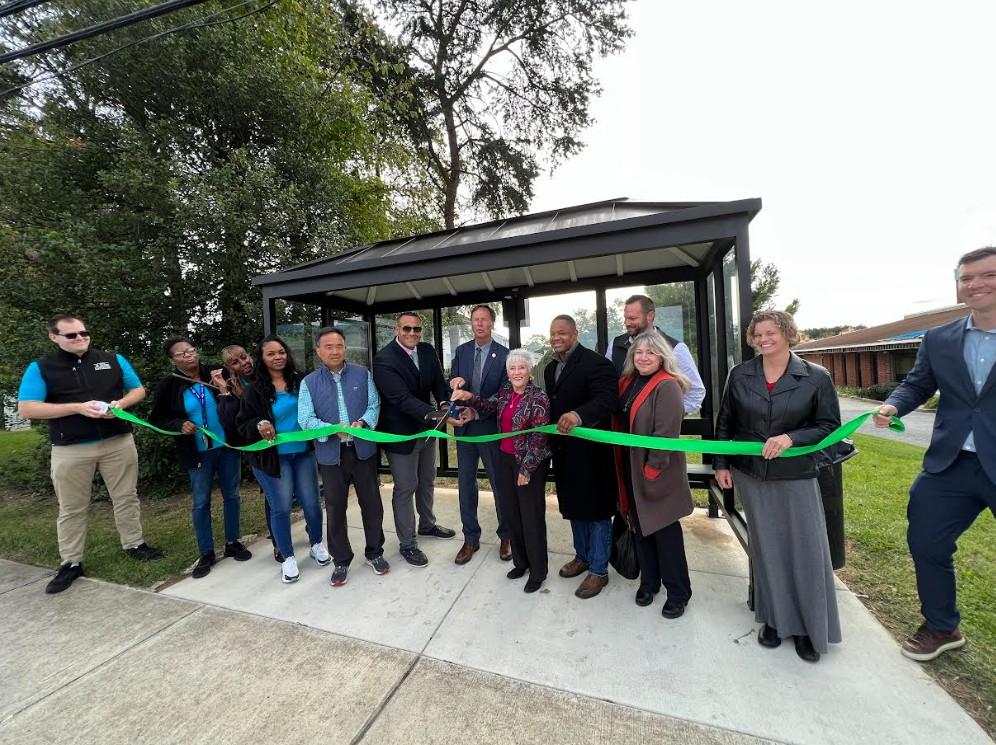
  • Quadrupled ridership by becoming a fare free system, modernizing buses and bus stops, and launching real-time route tracking.
  • Made progress on connecting our trail network, including the completion of the WB&A Trail Bridge to connect Anne Arundel & Prince George’s counties, and the South Shore Trail – connecting Odenton to the Millersville gateway, bringing us one giant step closer to a continuous path to Annapolis. 
  • Launched the Call N’ Ride Program in North and South County, offering on-demand services to residents in need of transportation. 
  • Launched the Easy Travel Access Rides-On-Demand Program through the Department of Aging & Disabilities, a new initiative designed to improve transportation options for older adults and adults with disabilities. The Taxi Voucher Program and the Rides-On-Demand Program offer on-demand transportation, allowing residents to travel independently at a reduced cost. 
  • Adopted Move Anne Arundel, the county’s first Transportation Master Plan, to enhance mobility and accessibility.
  • Adopted Walk & Roll Anne Arundel, the county’s bicycle and pedestrian master plan.
  • Adopted Vision Zero, a data driven plan to prioritize safety and reduce traffic fatalities and serious injuries across the county road network.
  Public Safety

Staffing & Growth:

  • Added 100 firefighter positions. 
  • Added 47 sworn police officer positions.
  • Increased police starting salaries to the highest in the state and implemented hiring bonuses to increase recruitment. 
  • Expanded the Office of Emergency Management from 5 positions to 11 positions. 
  • Provided a Sheriff’s Deputy in every courtroom. 
  • Funded hiring bonuses for detention officers to reduce vacancies. 
  • Transitioned Animal Services into an independent, standalone department and funded the positions needed to adequately staff the new agency. 
  • Partnered with the Maryland Department of Labor to create a Detention Officer Apprenticeship program to help attract individuals to the profession and decrease vacancies. 
  • Opened the Department of Detention Facilities’ new Central Holding and Processing Center, creating a streamlined process that allows the arresting agency to prompt return to their duties while the Central Holding and Processing Center manages the comprehensive booking procedure. 
  • Modernized police shifts by launching a 12-hour patrol shift schedule to boost officer wellness and improve work-life balance. 
  • Fully staffed the Arundel Mills Entertainment District for the first time since the Arundel Mills Mall opened. 
  • Increased staffing for the fire boats during summer weekends and holidays to improve emergency response on our waterways.

Facilities & Equipment:

  • Allocated $350M in capital funding for public safety infrastructure.
  • Funded the new Crownsville, Cape St. Claire, Waugh Chapel, Jessup, and Arundel Fire Stations and plans for a new Fire Training Academy. 
  • Funded the new Northern Police Station and a new Police Special Operations facility. 
  • Funded the construction of the new Joint 911 Center that will improve efficiency by combining our police and fire call-takers into one unified operation at a modern center under the leadership of the Office of Emergency Management.
  • Executed a 5-year apparatus replacement plan, investing approximately $61 million to replace the Fire Department’s aging fleet, expand coverage, and increase emergency response capabilities. 
  • Purchased two new fire boats and a dive boat, ensuring the Fire Department is equipped to handle maritime emergencies. 
  • Provided funding for additional Sheriff’s Office vehicles and updated civil disturbance equipment, along with uniforms and safety equipment for new Sheriff’s Office recruits.
  • Funded the concept design for a new Animal Shelter.
  • The Office of Information Technology replaced the legacy Public Safety Radio system, resulting in Anne Arundel County having one of the most reliable, redundant systems that provides guaranteed radio coverage in all schools, hospitals, and over 200 critical buildings in the county. 
  • Modernized public safety technology, equipment, and software systems to improve emergency response and enhance first responder safety and community well-being. 

Technology:

  • Implemented a comprehensive Body-Worn Camera Program for all sworn officers to bring more transparency to police operations. 
  • Created the Real Time Information Center, a state-of-the-art hub to enhance public safety and revolutionize crime prevention through the strategic use of advanced technology, data-driven strategies, and strong community partnerships. 
  • Passed legislation to allow for the installation of cameras on school bus arms to capture drivers who put our students in danger by illegally passing a stopped school bus.
  • Launched a drone program to provide real-time airborne support during 911 and police-generated calls for service – reducing response times, improving situational awareness, de-escalating potentially dangerous situations, and protecting the public and our officers. 
  • Launch an Automated Traffic Enforcement Speed Program and Automated Red Light Traffic Enforcement Program to improve roadway safety and reduce traffic-related fatalities and serious injuries.

Violence Prevention

  • Reduced violent crime across the county, a testament to the county’s modern policing strategies and integrated approach to address the social determinants of violence. 
  • Formed the Gun Violence Prevention Task Force, and followed their recommendation to create the Gun Violence Intervention Team within the Department of Health to treat gun violence as a public health crisis.
  • Launched violence interruption programming through the Department of Health in Eastport, Severn, and Brooklyn Park, a proven strategy for supporting trusted community members in interrupting interpersonal violence, mediating conflicts to reduce the risk of escalation, and changing norms around community violence.
  • Led the State in Extreme Risk Protection Orders (ERPOs) to remove firearms from dangerous situations. 
  • Launched a first-of-its-kind partnership in the state with the Department of Health and Anne Arundel County Public Libraries to offer free gun safety locks at all libraries, distributing more than 12,000 gun locks to increase gun safety and reduce unintentional injuries. 
  • Created multiple gun safety toolkits about suicide prevention, domestic violence, youth gun safety, and responsible gun ownership to educate residents and reduce gun injuries and deaths. 
  • Supported the passage of legislation unanimously passed by the County Council to require businesses that sell guns or ammunition to display and distribute resources on mental health, suicide prevention, gun safety, and gun training.

Protecting Vulnerable Communities

  • Terminated 287(g), the county’s federal contract with ICE to screen jail detainees for immigration status.
  • Supported the Mobile Integrated Community Health Program – a partnership between the Fire Department, Department of Aging & Disabilities, and our local hospitals that decreases 911 utilization and emergency room visits by identifying individuals who frequently utilize 911 for non-life-threatening medical reasons and linking them to resources that more appropriately meet their needs. 
  • Established the Police Accountability Board and Administrative Charging Committee in alignment with state reform laws.
  • Passed tenant cooling safety legislation requiring landlords to maintain AC systems, offer temporary cooling during outages, and face fines for non-compliance.
  • Was the first county jail system in the country to implement the Active Bystander Training program to promote a safer and more rehabilitative correction system. 
  • Expanded the Police Department’s Youth Activities Program to include multiple juvenile diversion initiatives and other youth programming to reduce recidivism and encourage good decision making.

   The Pittman Years: 
Making The Best Place - For All


  Key Media & News Coverage


WMAR
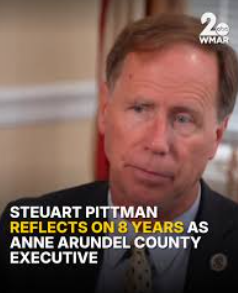
Steuart Pittman reflects on 8 years as Anne Arundel County Executive

View Story
What's Up?
Anne Arundel County Executive Steuart Pittman Reflects on the Past, Present & Future

View Story
Business View Magazine
Anne Arundel County recognized as one of Maryland’s best managed counties

View Story

  Photo Gallery


  Testimonials